Why Calves-First Dairy Practices Matter for Animal Welfare
For anyone interested in ethical food systems and compassionate animal care, few topics are as important—or as frequently overlooked—as what happens to a calf during the first weeks and months of life.
In standard commercial dairy production, newborn calves are routinely separated from their mothers within hours of birth so that all available milk can be harvested for human consumption. While common in industrial agriculture, early separation disrupts one of the strongest natural bonds in the animal kingdom.
At Krishna Valley Care for Cows in Bambra, Victoria, cow care is guided by a fundamentally different standard: a calves-first approach.
What Is a Calves-First Approach?
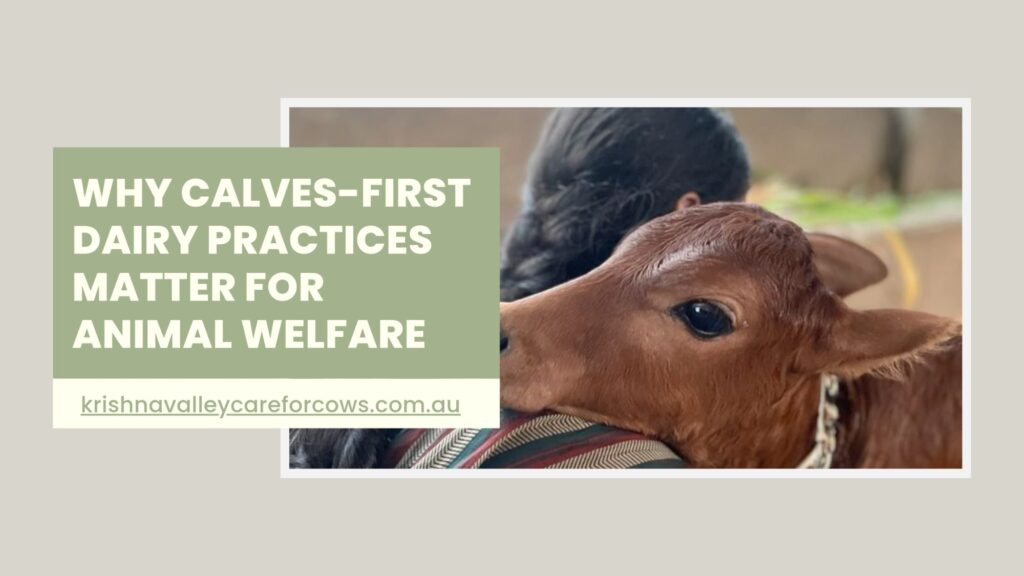
A calves-first philosophy puts the nutritional, physical, and emotional needs of the newborn calf ahead of any human desire for milk. Simply put, milk belongs first to the calf.
Only after a calf has nursed freely, received essential early colostrum, and grown strong enough to share surplus milk—without compromising its health or maternal bond—is gentle, non-exploitative milking ever considered.
Why Maternal Bonding Is Vital for Calves and Cows
Cows are deeply maternal, emotionally intelligent animals. Observing a mother cow and her newborn calf in a natural pasture setting reveals how essential their relationship is:
1. Immediate Colostrum and Immune Strength
During the first 24 hours after birth, a mother cow produces colostrum—nutrient-dense first milk packed with antibodies that build the calf’s immune system. Allowing the calf to nurse naturally ensures timely, stress-free nourishment.
2. Emotional Security and Reduced Stress
Cows form strong attachments to their offspring immediately after calving. When mother and calf remain together, both experience significantly lower stress levels. Mothers groom, lick, and vocalise softly to their calves, helping regulate the newborn’s body temperature and behaviour.
3. Natural Socialisation Within the Herd
Calves raised alongside their mothers learn vital social cues directly from the herd. They learn how to graze, where to find water and shelter, and how to interact safely with older cows and bulls. This natural upbringing produces calmer, healthier, and more confident adult cattle.
4. Long-Term Physical Health
Calves that nurse directly from their mothers develop strong digestive systems and steady weight gain, avoiding many of the stress-related ailments common in artificially reared calves.
How Calves-First Aligns With Ahimsa
The Sanskrit principle of Ahimsa—non-violence and compassion toward all living beings—requires us to look beyond surface appearances and examine whether our actions cause hidden distress.
Even if a cow is fed well, separating her from her newborn calf causes acute emotional distress for both animals. By prioritising the calf’s birthright to stay with its mother, a calves-first practice honours the natural family structure of cattle and eliminates unnecessary suffering.
Supporting Ethical Calf Care at Krishna Valley
Caring for mother cows and growing calves requires dedicated maternity pastures, extra nutritional support for nursing mothers, warm dry shelters, and attentive veterinary monitoring.
Supporters of Krishna Valley Care for Cows can directly contribute to maternal and newborn wellbeing through dedicated initiatives such as our Pre and Post-Natal Care sponsorship tier, which helps fund specialised feed, bedding, and health checks for mothers and calves.
See the Difference Compassionate Care Makes
When you visit a sanctuary that practises calves-first care, you witness a peaceful rhythm of life rarely seen in modern agriculture—calves playing in open paddocks before returning to nurse beside their calm, attentive mothers.
Learn more about our ethical cow-care standards or support mother and calf wellbeing through cow sponsorship at Krishna Valley Care for Cows.